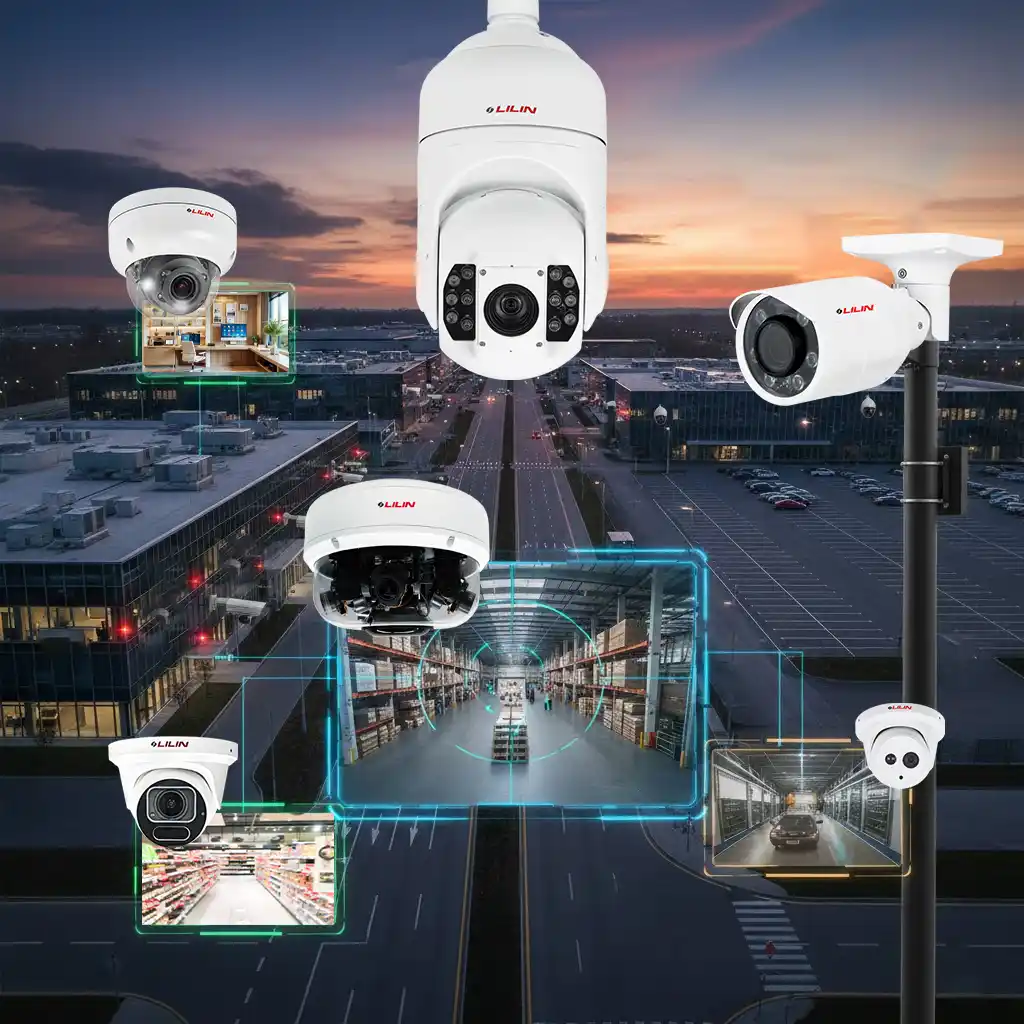

In the architecture of a modern security system, the lens is the heartbeat of performance. While many focus on megapixels or storage, the optical characteristics of a lens ultimately dictate whether your footage is a valuable asset or a blurry liability. Understanding the logic behind Wide-Angle, Fisheye, and Telephoto lenses is the first step toward building a system that truly protects.
The wide-angle lens is the industry standard for general surveillance, typically featuring focal lengths between 2.8mm and 4mm. Designed to capture the "big picture" within limited distances, a 2.8mm lens offers a sweeping field of view, allowing a single camera tucked in a corner to command an entire room.
However, this breadth comes with a trade-off in "detail depth." As objects move beyond five meters, facial features begin to soften due to optical diffusion, making these lenses ideal for general monitoring—understanding the flow of events—rather than pinpoint identification. To maximize their effectiveness, savvy buyers should prioritize models with Wide Dynamic Range (WDR). Because wide lenses often capture both dark interior corners and bright exterior windows in a single frame, WDR ensures the image remains balanced, preventing the scene from washing out or disappearing into deep shadows.
Fisheye lenses represent the extreme of optical engineering, providing a seamless panoramic view that eliminates blind spots entirely. In large, open environments like warehouses, hotel lobbies, or parking structures, a single fisheye camera can replace a multi-camera array, offering a "one-to-many" efficiency that is highly attractive for large-scale deployments where coverage is paramount.
The true soul of a fisheye system lies in its dewarping capability. Because raw fisheye footage is naturally warped and circular, the backend software must be sophisticated enough to "unroll" the image into natural, flat perspectives. Furthermore, because a fisheye stretches its pixels across a massive area, resolution is critical. To maintain clarity during digital zoom, a minimum of 5MP is required, though 12MP (4K) models are recommended for professionals who need to maintain evidence-grade detail when magnifying a specific corner of the room.
Where wide-angle lenses seek breadth, telephoto lenses demand depth and precision. With focal lengths ranging from 8mm to several hundred millimeters, these lenses have a narrow field of view but powerful optical magnification. They bring the distant world into sharp focus, making them indispensable for highway monitoring, airport perimeters, and border security.
The core mission of the telephoto lens is identification. Whether it is reading a license plate at a parking exit or verifying the denomination of currency at a bank teller’s desk, these lenses provide the high pixel density required for forensic-level detail. However, this power requires absolute stability. High magnification amplifies even the slightest vibration, meaning these cameras must be paired with heavy-duty brackets or advanced PTZ (Pan-Tilt-Zoom) systems equipped with specialized image stabilization to prevent the footage from becoming unwatchable.
A world-class security layout rarely relies on a single lens type. Instead, an ideal system utilizes a "Point-to-Plane" strategy where a fisheye camera provides global perception to track a subject's movement across a space, while wide-angle cameras secure specific zones, and telephoto lenses act as the "closer," capturing high-definition details at critical chokepoints.
For business owners starting the selection process, the first step is evaluating the installation height and distance. If the ceiling is under 3 meters and the target is within 5 meters, a 2.8mm or 4mm fixed lens offers the best return on investment. For vast, unobstructed areas over 100 square meters, a high-resolution fisheye or a multi-sensor camera can significantly reduce cabling and licensing costs.
In dynamic environments like outdoor corridors or parking lots, the most flexible choice is often a Varifocal Lens. This allows the installer to manually or electronically tune the focal length on-site, ensuring the perfect frame regardless of environmental constraints.
While light sensitivity and night vision are stories for another day, your optical foundation starts with selecting the right lens for the right task.

CIO of Merit LILIN and a 20-year veteran of the surveillance industry. Expertise spans from R&D in Edge AI cameras and cybersecurity to the development of award-winning VMS and NVR systems. With experience presenting in 34 countries and briefing top government officials on industry security, Steve combines global market insight with deep technical knowledge. Currently, he also leads industry-academia programs at NTUST, focusing on the advancement of AI technology and talent development.
 EN
EN  TW
TW