Camera Resolution Calculator
Enter the camera model, scene width, installation height and distance to calculate the required focal length, plus the pixels per foot and per meter at the target. Use it to judge whether faces or license plates are identifiable at that distance. The calculator also uses each model's own horizontal angle of view to tell you how wide a scene it actually covers at that distance.
Drag the marker to set the distance. On zoom models, drag the handles at either end of the coverage dimension to zoom.
Pick a model and enter a scene width and distance, and the coverage is drawn here from that model's own angle of view. Panoramic models and models with no angle of view on record are not drawn.
DORI levels
DORI is the industry ladder for how much a camera lets you tell apart, spelled out as Detection, Observation, Recognition and Identification. Each level describes what can be observed at a target pixel density. The four frames use one complete parking entrance scene and apply a relative pixelation preview at each threshold, keeping the person and vehicle in their surrounding context while adding a separate enlarged plate detail inset. This is an illustration, not a test image. Real results also depend on target size, light, angle, lens, compression and motion. The calculator separately simulates face and plate detail and highlights your calculated level. Definitions are from IEC 62676-4:2014.
-
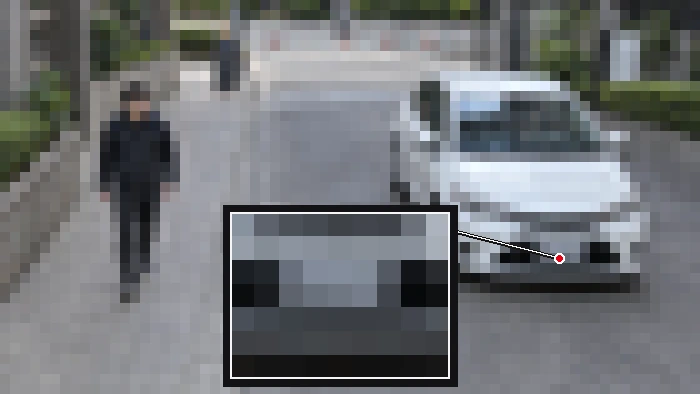
Detection
from 25 pix/m
Confirm that a target is present, without reliable face or plate detail
-
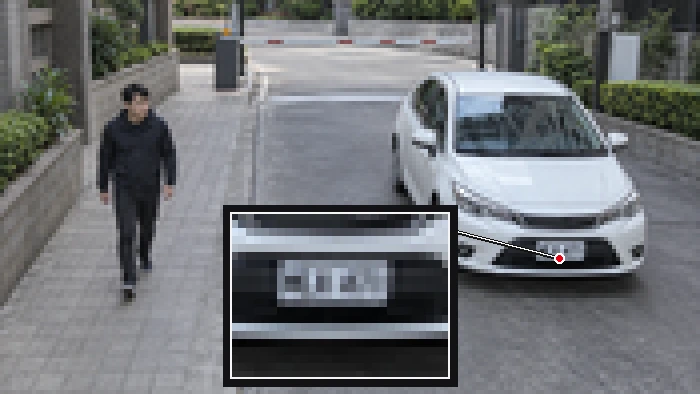
Observation
from 62.5 pix/m
See a person's outline and clothing colour, or a vehicle's general form
-
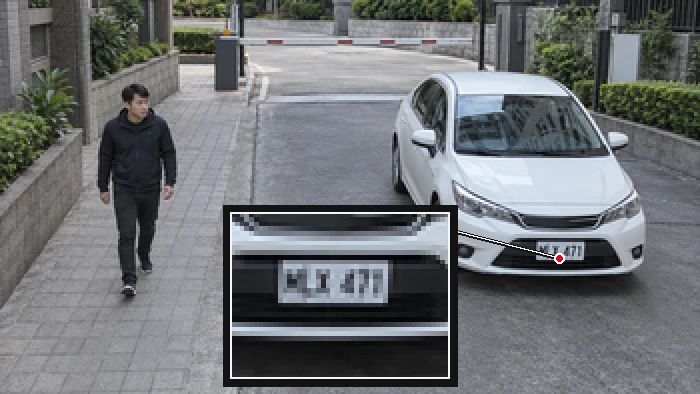
Recognition
from 125 pix/m
Compare a person or vehicle with a reference and judge whether it is familiar
-
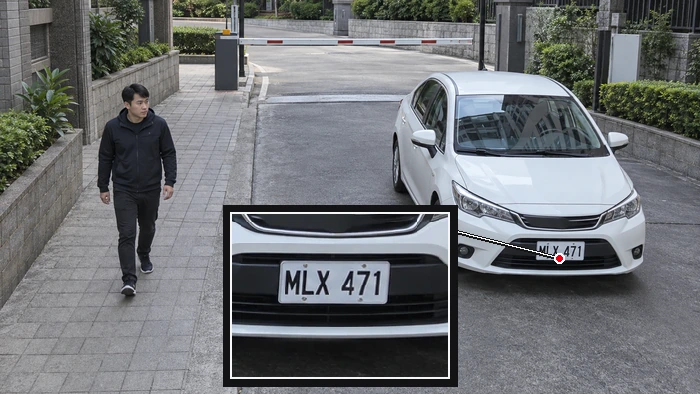
Identification
from 250 pix/m
Compare individual features or vehicle details