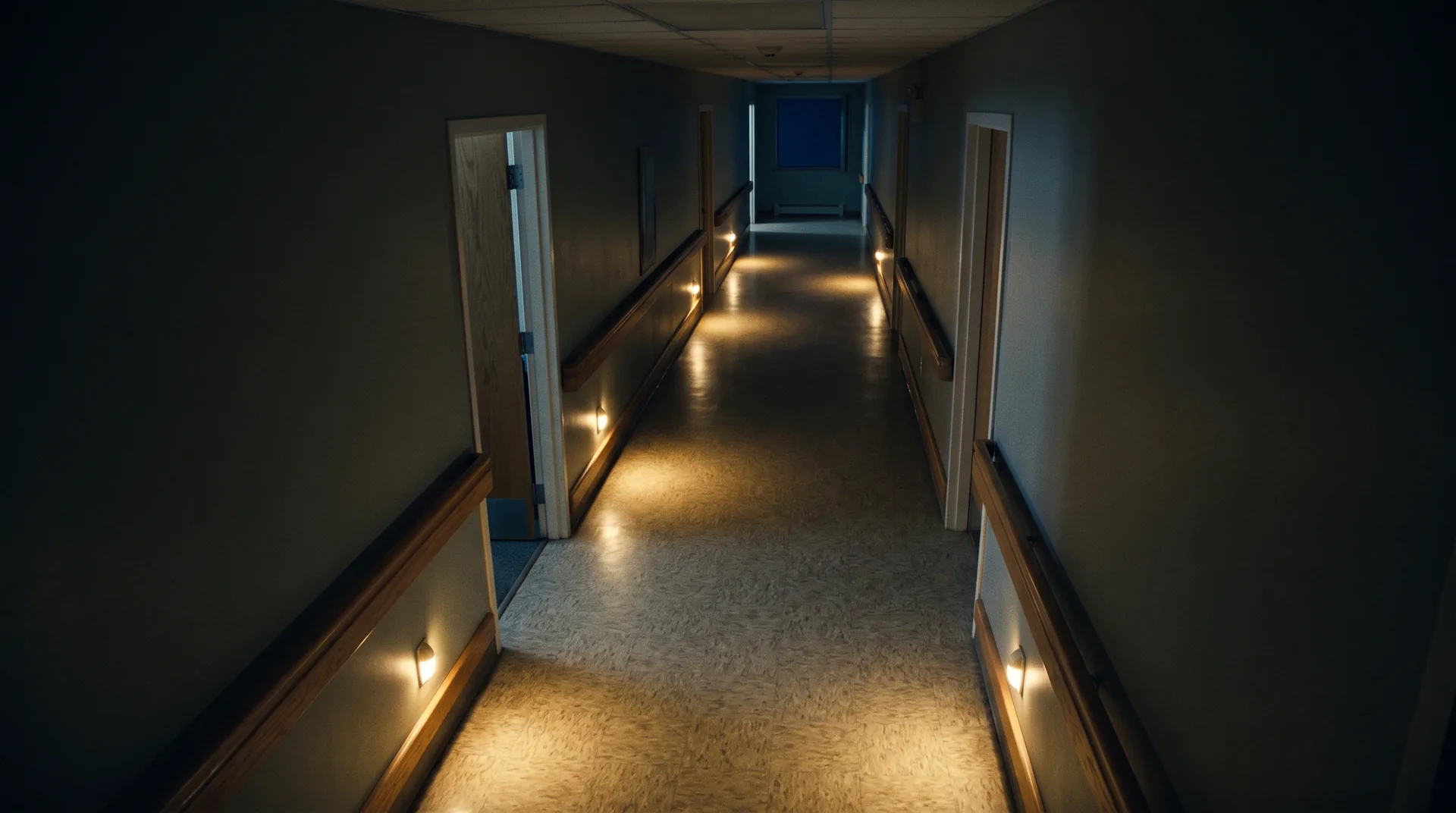
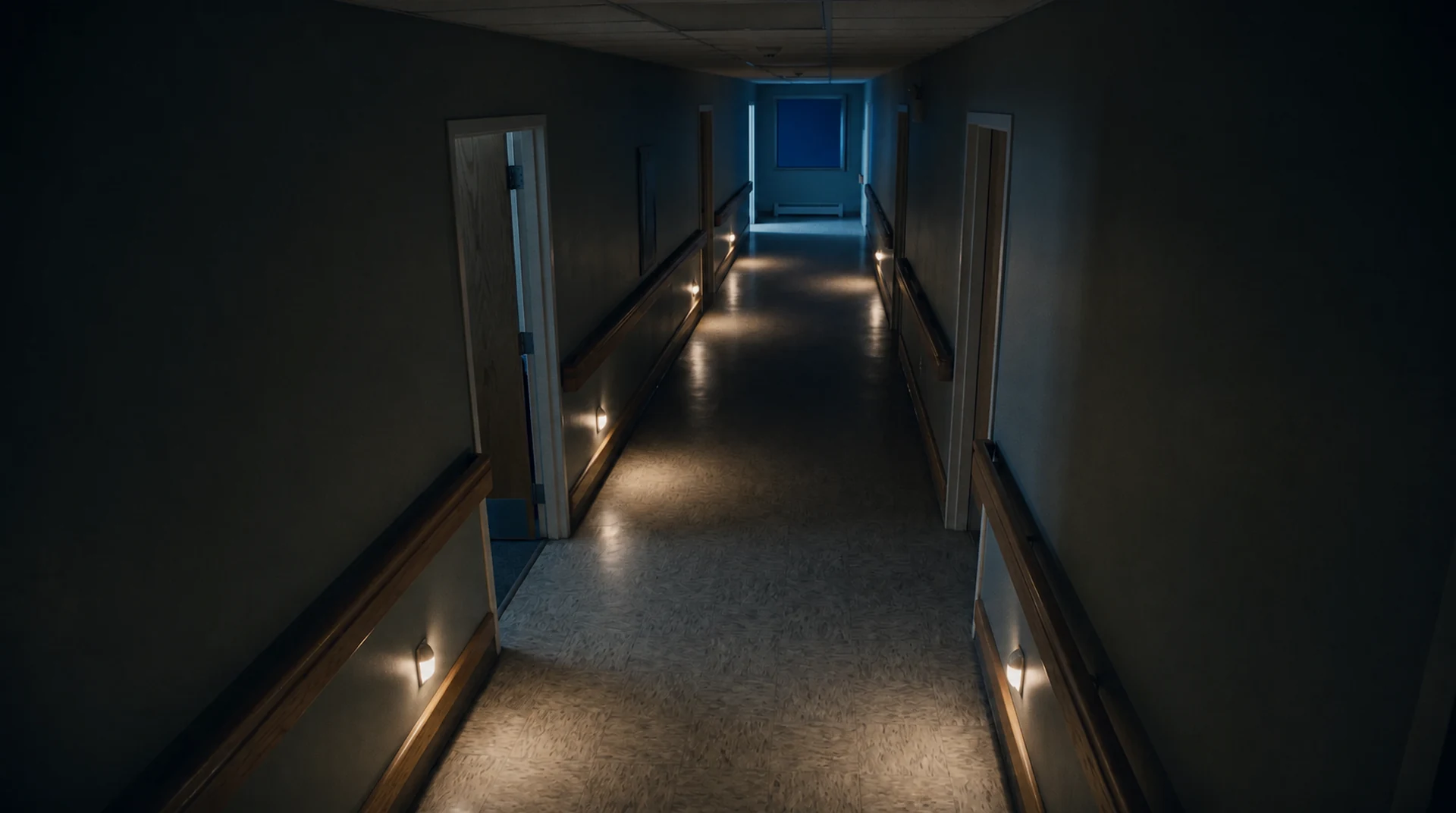
A care facility corridor late at night

After dark

Three in the morning.
No one is watching.

A fall never waits for daylight.
Most emergencies happen in the still of the night, or in the daytime when someone is alone.

The first moments after a fall
often decide the years that follow.

Night staff are stretched thin; no one can watch every room at once. Install cameras, and residents feel watched. Leave them out, and a fall goes unnoticed.
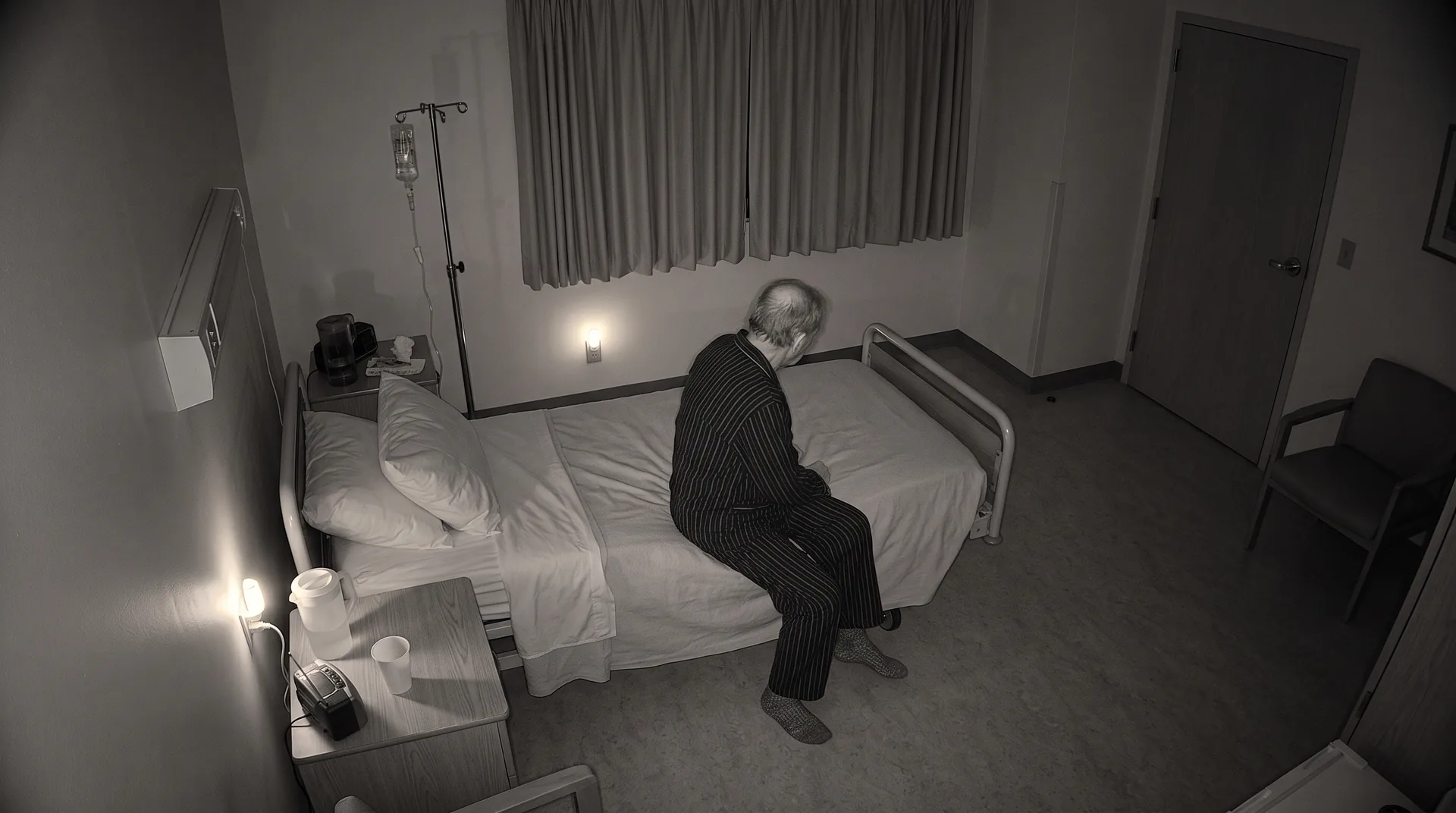
A care room at night, seen by a standard camera
Standard camera
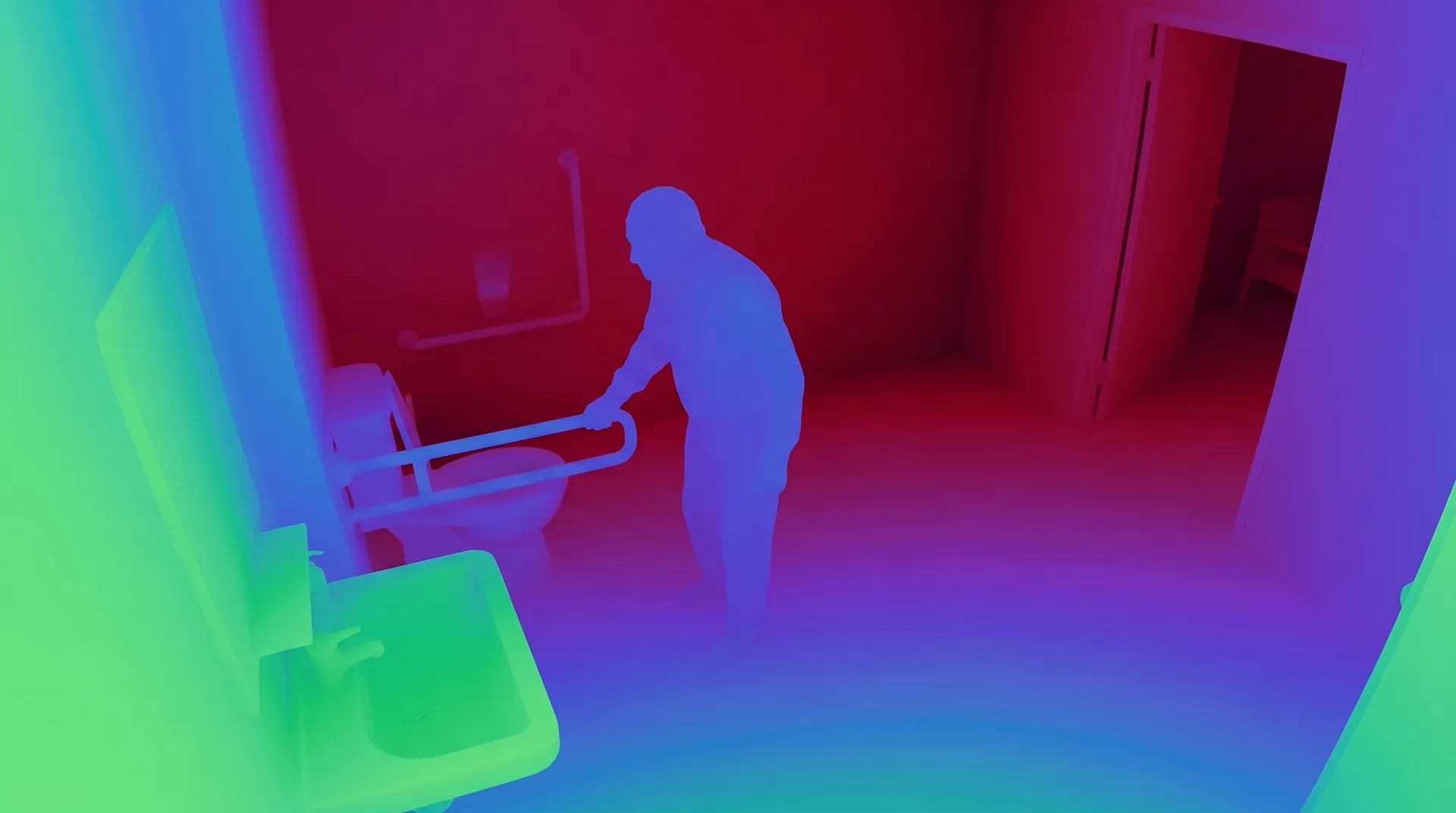
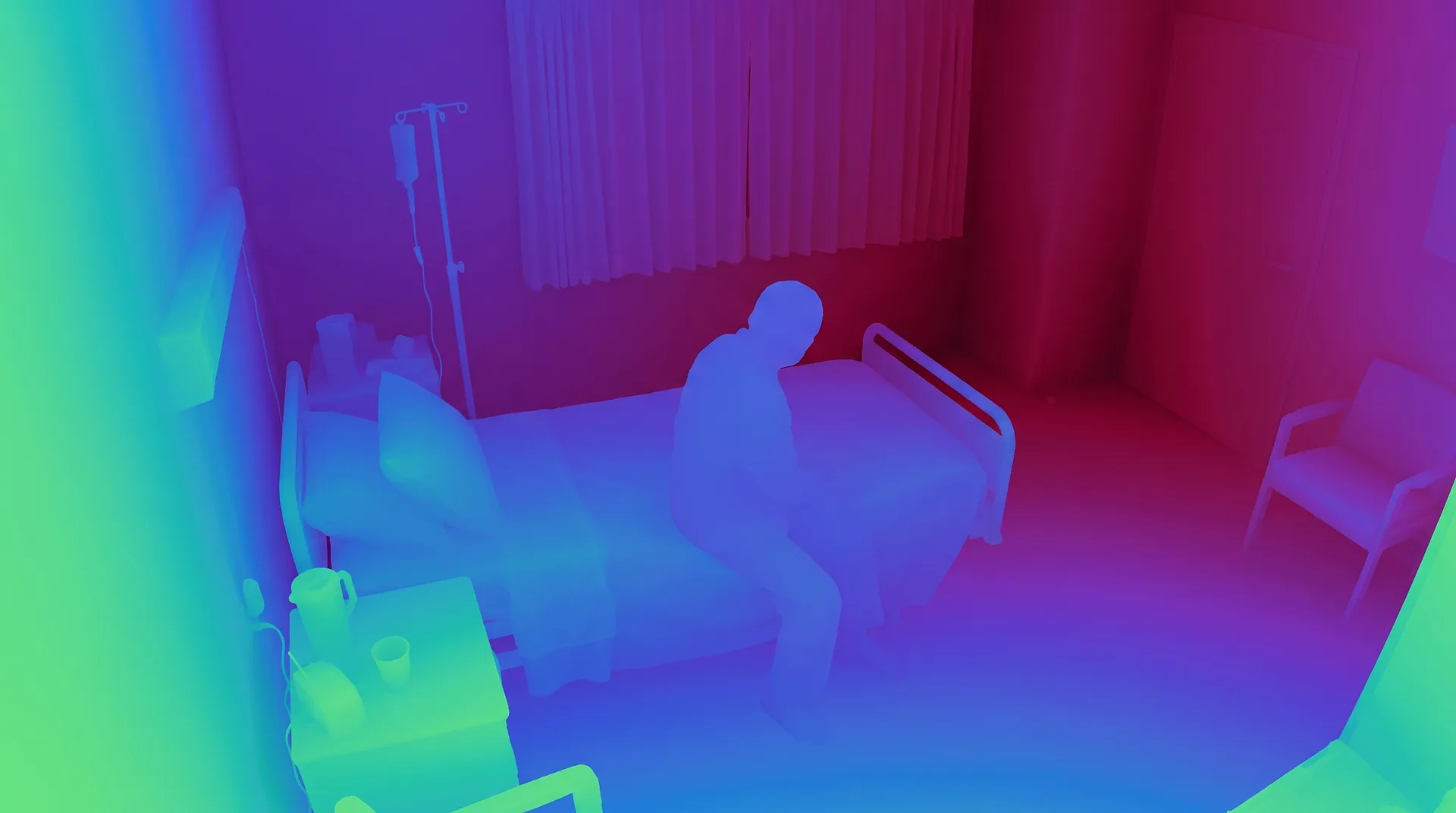
The same room as a ToF depth image ToF depth view of a washroom
ToF depth view

No one wants to be watched all day

A regular camera captures faces, expressions, the whole of daily life. Safety at the price of peace of mind. Is that worth it?

It detects motion, not surveillance footage

Time-of-Flight measures distance by the travel time of light. What it renders is a depth silhouette: physical features blur away, leaving only movement and posture.

Privacy does not have to cost anything

A ToF sensor is physically incapable of capturing an identifiable face. Not masked after the fact; it simply never gets captured

Some places were never meant to have cameras.

Changing rooms, restrooms, wards in the middle of the night. ToF produces no identifiable imagery yet still detects dangerous movement, covering both needs at once.
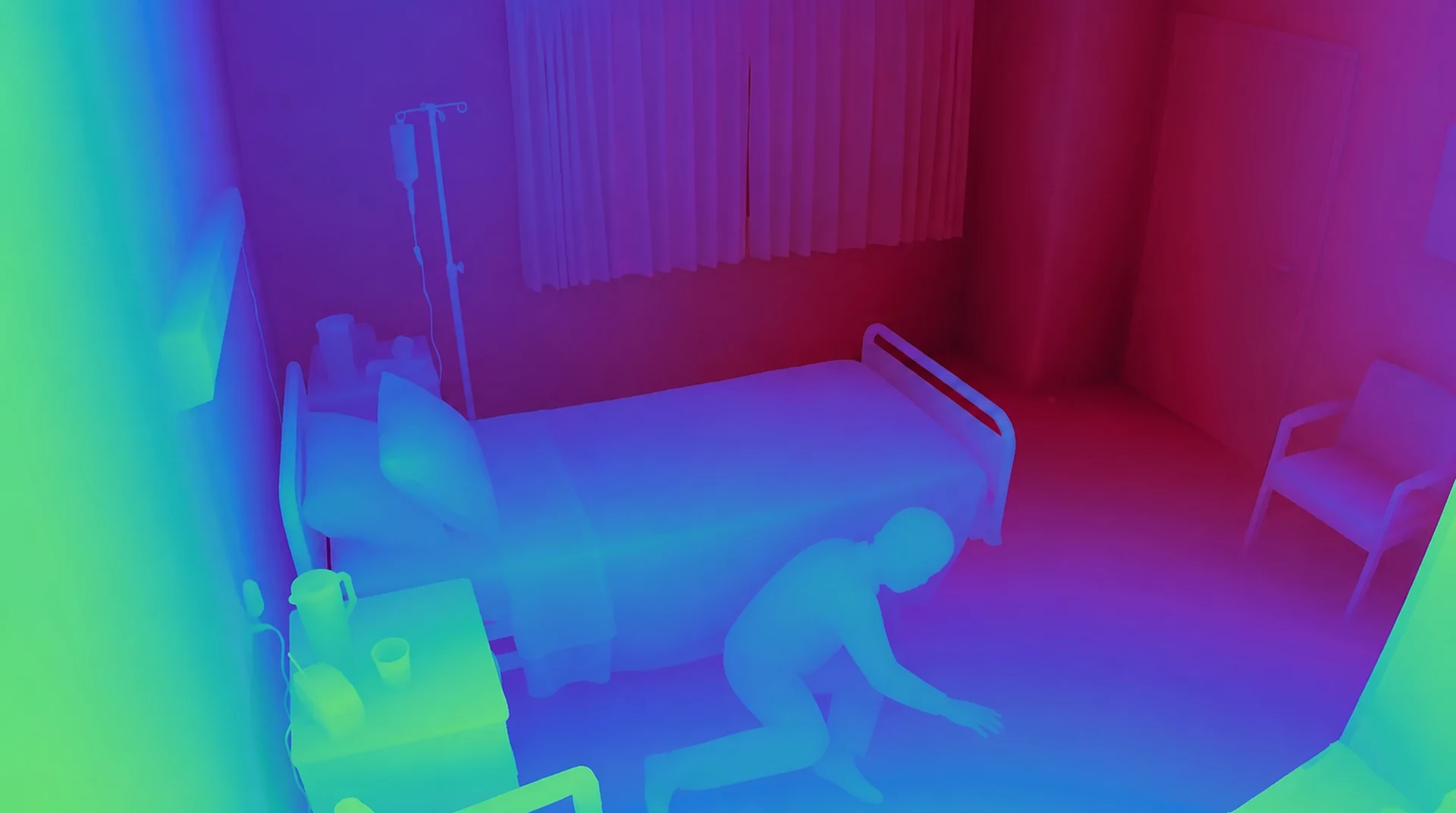
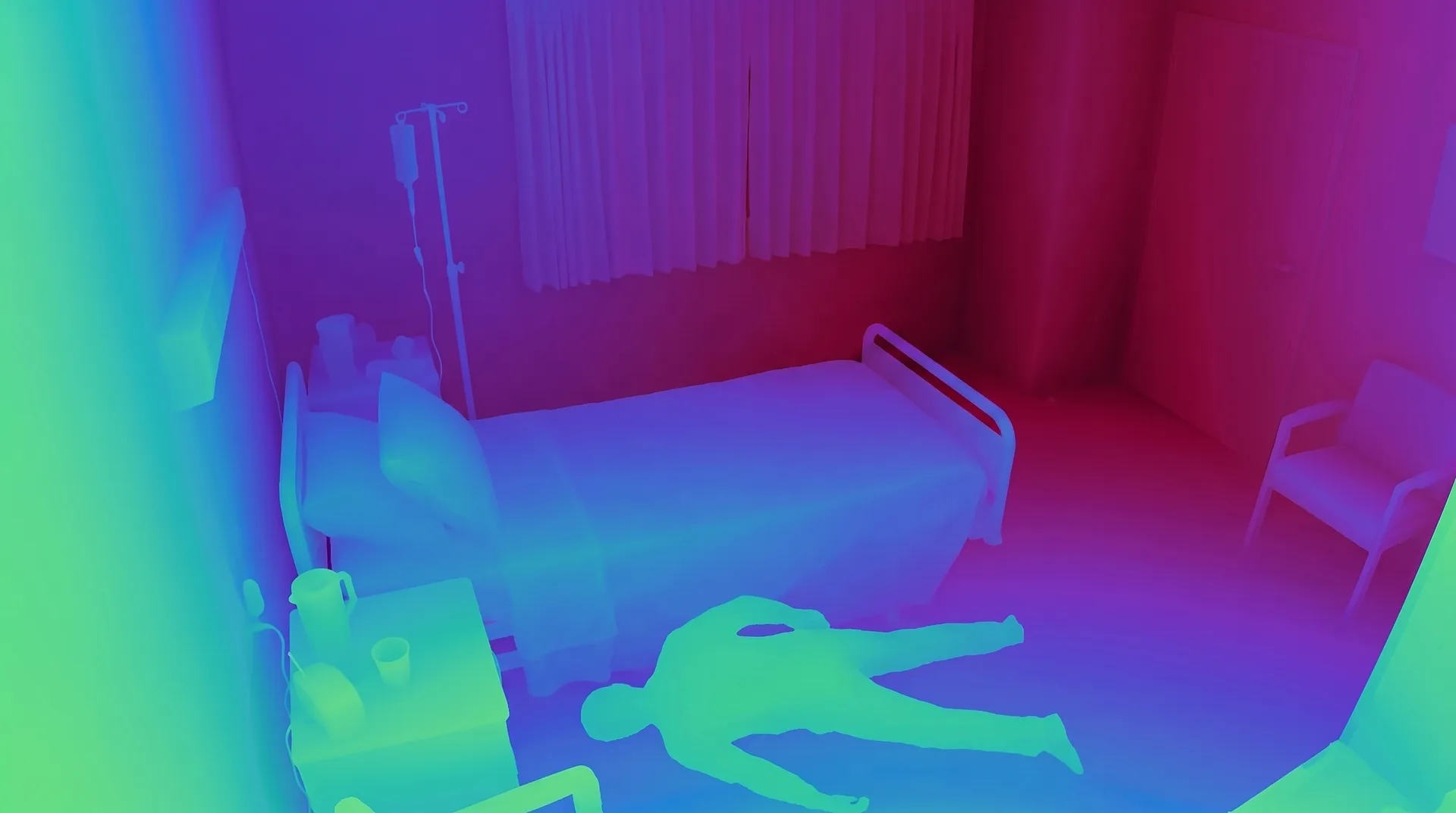
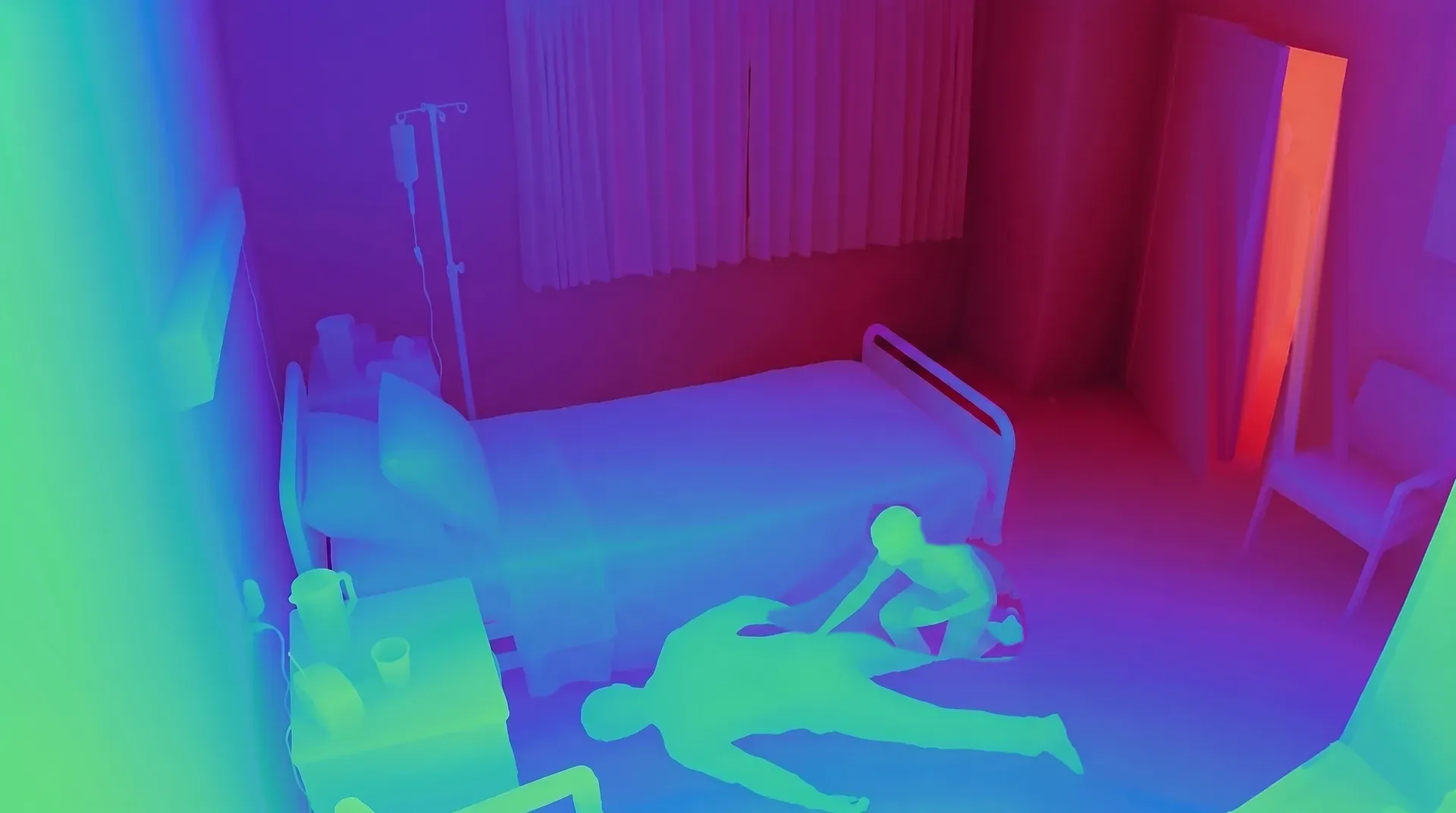
03:12:07

Fall Detected

Something changes in the frame. The AI knows this is not sitting down, not bending over. It is a fall.

03:12:09

Alert Sent

The alert goes out at once to the duty side. The ToF system judges the event and notifies on its own, buying golden response time.

Timeline and depth views are a scenario reconstruction; see actual output below.
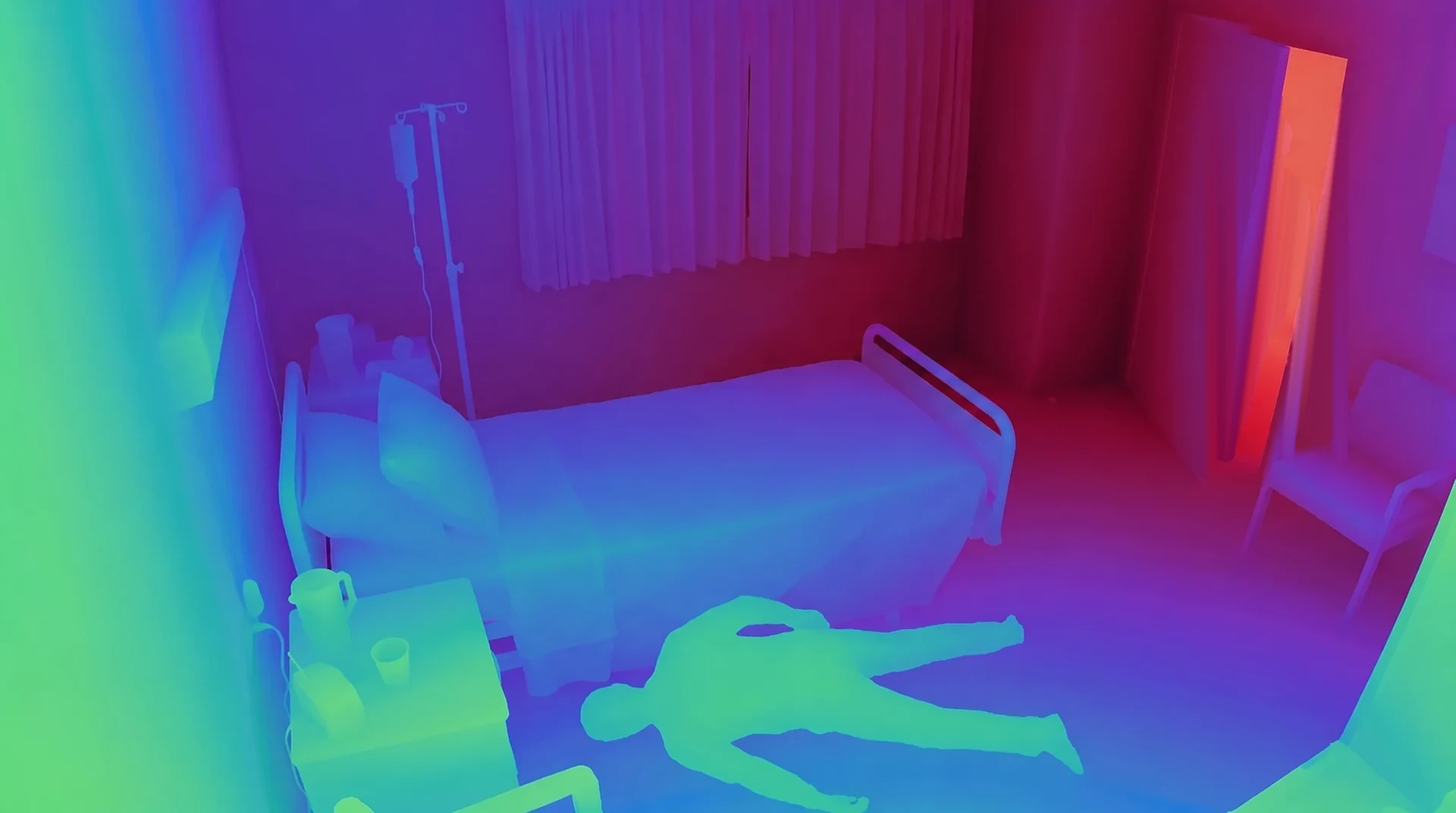
03:12:09

The Alert Reaches the Nurse Station

Down the corridor, the pager on duty lights up. No one has to stare at screens all night; the system brings the event to a person.

03:15:41

Caregiver Arrives

ToF keeps sensing every room; staff appear only when they are needed.

DS362 / THE SYSTEM

Sensing the state of space and volume,
not surveillance

DS362 uses a Sony DepthSense sensor to capture 3D spatial information, retaining body outline, posture, and spatial distance without providing facial detail that identifies a person.
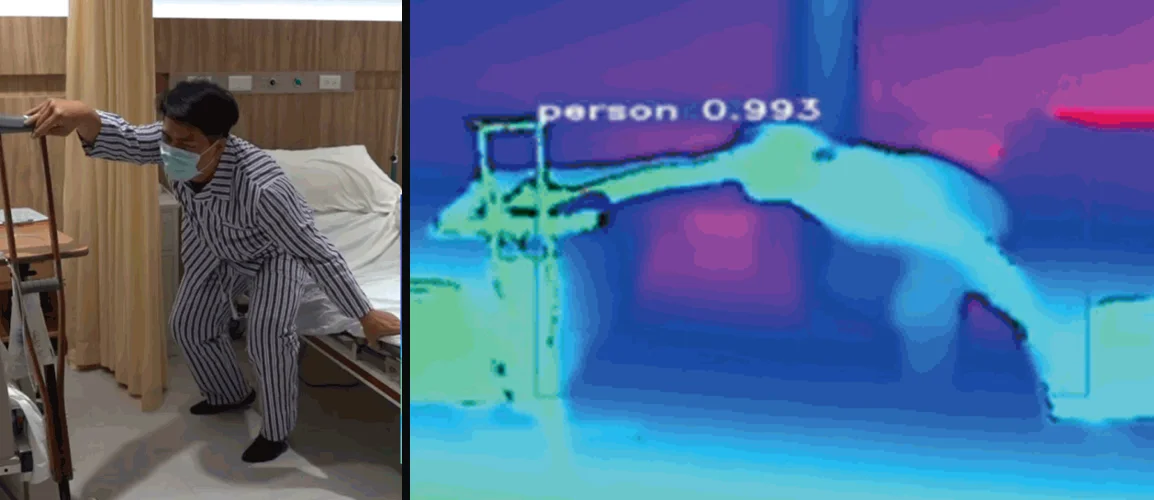
Actual comparison between a standard image and ToF depth output
LeftStandard image reference RightToF depth output with person detection

Key Specifications

640 × 480
depth resolution
15 fps
live depth stream
0.3–7.4 m
working range
IMX570
Sony DepthSense

From Sensing to Response

01 / SENSEDS362

Capture depth and identify posture and behaviour.

02 / MANAGENAV5.0 or PMH

Receives the event and manages notification for the site: NAV5.0 retrieves event footage with AI search; the optional PMH-AMDRYZEN5300 server handles AI event analysis.

03 / RESPONDCare team

Act on the event source and time.

Image from LILIN ToF solution demonstration material. Specifications are based on DS362 product data. The corridor, room, and duty-station scenes on this page are re-enactments. Deployment can connect to PMH care management or NAV video management, depending on site requirements; the full workflow is shown in the official demonstration video.
03:16:08

No need to keep watch.
Leave it to ToF.

Caregivers no longer have to watch every room all night. Depth sensing notifies the duty station the moment a fall happens: fast, clean, and free of worry for residents and caregivers alike.

Common Questions on Fall Detection and Privacy

What fall detection sensors for nursing homes protect privacy by not recording faces?

LILIN DS362, DS362A, and DS362AW use Time-of-Flight depth sensing, which captures spatial information without recording identifiable faces. The sensor measures distance by the travel time of light, rendering only a depth silhouette: body outline, posture, and movement, with no RGB channel data or facial detail. This design allows continuous monitoring for falls while preserving resident privacy.

How does Time-of-Flight depth sensing detect falls differently than a standard camera?

A standard camera captures visible light, recording faces, expressions, and daily activities. ToF depth sensing measures the distance and spatial position of objects and people without capturing any identifiable imagery. When a person's depth profile suddenly changes shape or position, indicating they have fallen, the system automatically alerts staff without ever recording who the person is or what they look like.

What are the key technical specifications of DS362 depth sensors?

DS362 series sensors use the Sony DepthSense IMX570 chip and deliver 640 × 480 depth resolution at 15 fps live stream. The working range is 0.3–7.4 m, allowing coverage of typical care facility rooms and corridors. These specifications enable fast, accurate posture and behavior detection for fall recognition.

Can ToF depth systems integrate with existing care management software?

Yes. DS362 systems connect to NAV5.0 video management or PMH care management servers, depending on site requirements. The system outputs events with timestamps and location data; NAV5.0 provides AI-powered event search and retrieval, while PMH-AMDRYZEN5300 handles real-time AI event analysis and alert escalation to duty staff.

Which areas of a care facility benefit most from ToF fall detection?

ToF is particularly suited for restrooms, changing areas, and private patient wards, spaces where traditional surveillance cameras would be inappropriate or unwelcome. Because the sensor produces no identifiable imagery, it can be installed in sensitive areas while still detecting dangerous falls and unexpected posture changes, providing safety without compromising dignity.

Does ToF depth sensing work in darkness?

Yes. Unlike RGB cameras that require visible light, ToF depth sensing measures the flight time of infrared light, making it independent of ambient lighting. This allows the system to detect falls just as accurately during the night shift or in dimly lit areas as it does in daylight, which is critical for long-term care facilities where emergencies often occur during night hours.