Availability and payment are only part of the workload
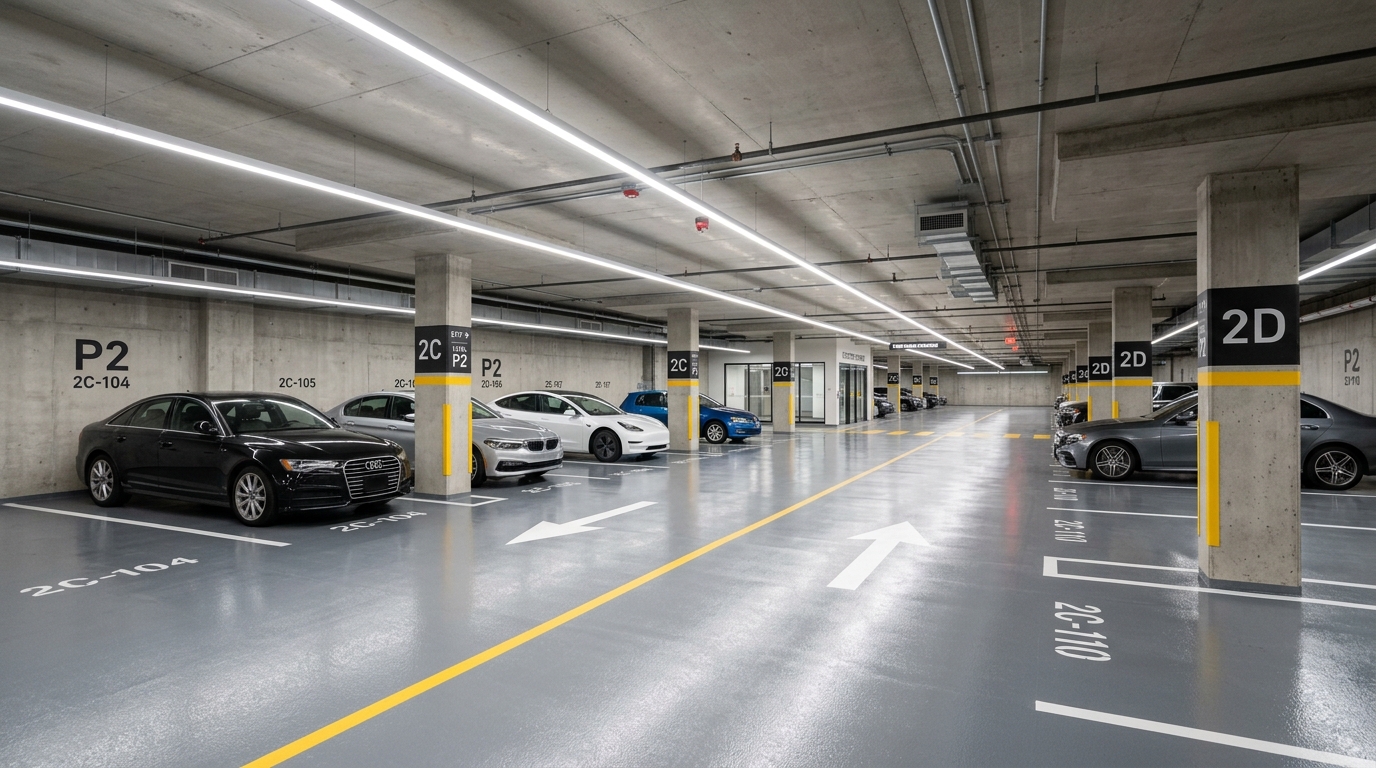
A parking facility can have open bays while drivers circle a floor that is already full. Capacity is unevenly distributed, and information often reaches entrance and floor signs too late during busy periods. The facility may be operating below its theoretical capacity even as drivers struggle to find a place to park.
Staff also handle payment complaints, vehicle damage claims, and fare evasion. Each case requires a record search, and some involve reviewing long stretches of footage from several cameras. The labor grows with the size of the site.
Occupancy can be measured by a detector above each bay or by a wide-angle AI camera covering several bays. Current status feeds entrance displays, floor guidance, or a mobile app. Drivers can see which floor has space before entering and follow signs once inside instead of searching each aisle.
The same occupancy data can support variable pricing. Busy periods, preferred floors, and low-demand areas may carry different rates. A fixed tariff can underprice off-peak capacity and fail to reflect peak demand; live occupancy gives operators a basis for balancing turnover and revenue. In many facilities, the resulting revenue improvement is substantial.

Bay detection identifies where a space is occupied. Entrance ANPR identifies the vehicle that passed the camera. Matching a plate to one particular bay requires another source of evidence, such as in-facility tracking, zone reads, or plate imagery near the bay.
The number plate can replace a ticket
Tickets can be lost or transferred, and a failed dispenser or validator can stop a lane. ANPR uses the number plate as the vehicle credential. Each passage creates a timestamped image record, so drivers do not need to collect a physical token and one ticketing device no longer blocks the entire transaction.
Permit parking becomes more direct. An enrolled plate can prompt the barrier to begin opening before the vehicle has fully stopped. An unknown plate in a permit lane can raise an alert without requiring security staff to watch a monitor continuously. Enrollment, vehicle changes, and deactivation take place in the system, removing the cost of replacing lost access cards or tickets.
The entry and exit record also gives billing staff a reference when a driver questions the duration or charge. They can compare the plate read, source image, and system timestamp with the moment the vehicle crossed the barrier. A documented basis for the charge leaves less room for recurring disputes between the driver and operator.
Begin a damage inquiry with the entry and exit images
A driver may return to find a new scratch while the operator has little evidence showing when it occurred. Even if a camera captured the incident, searching hours of footage across multiple feeds is slow and costly.
The practical starting point is to compare vehicle condition at entry and exit, then review in-facility cameras within the recorded stay. This narrows the search and can show whether the damage occurred before entry, while parked, or after departure. The footage helps reject claims for pre-existing damage and protects drivers who might otherwise be blamed for contact caused by another vehicle.
Records at the entrance, exit, and parking area also influence behavior. A driver who leaves after a collision knows that the plate and vehicle condition will be recorded again at departure, reducing the chance of escaping identification. Facilities commonly see a marked decline in hit-and-run incidents and related disputes after deploying ANPR with broad camera coverage. The reduction can exceed what management expected, making deterrence one of the less obvious long-term returns from the system.