Red-light enforcement has relied on the same instrument for decades: an induction loop embedded in the pavement. When a vehicle passes over it, the change in magnetic field registers one count. It is a cheap and durable method, and it detects red-light entries well enough.
It also captures very little: the loop does not record vehicle class or speed, and it has no view of turning movements. And red-light running is only one of the violations a city has to manage.
From Counts to Trajectories
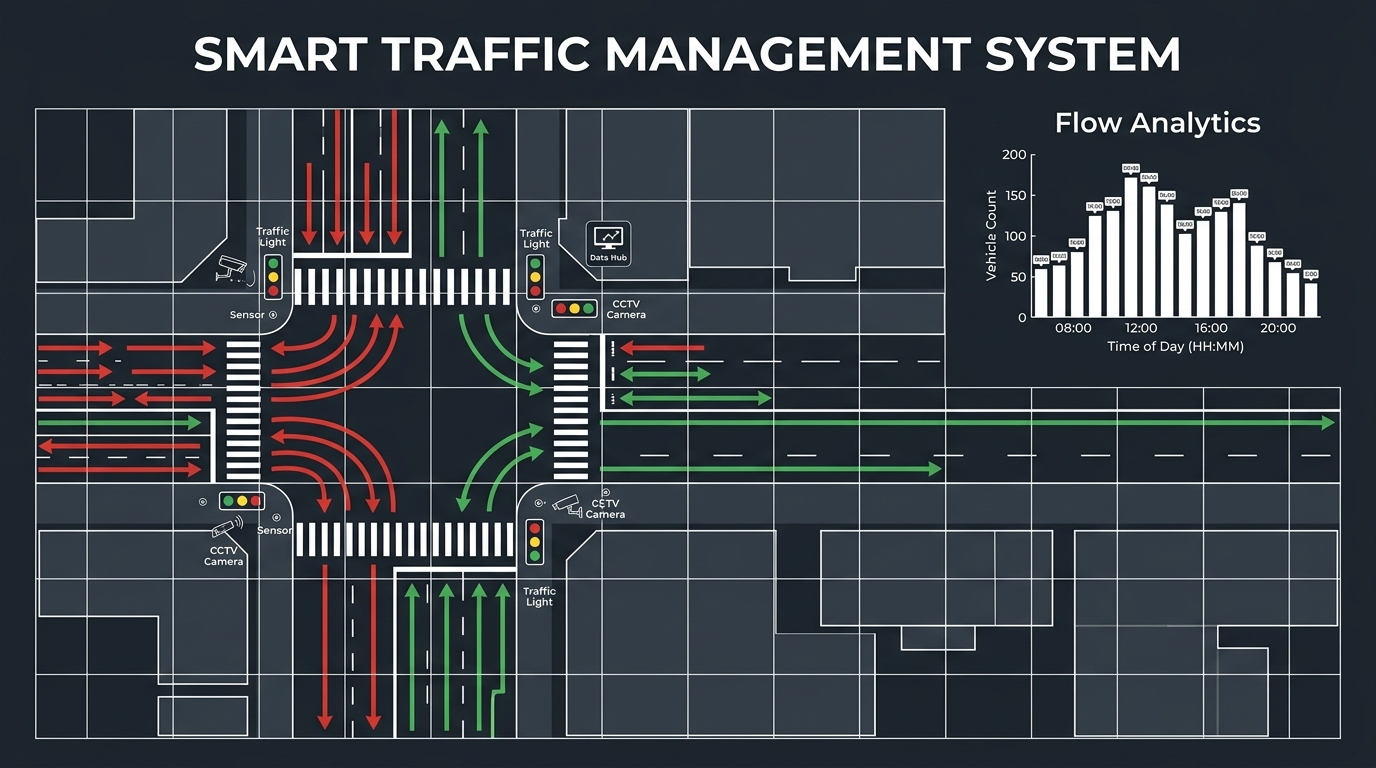
An AI traffic camera maintains a trajectory for every vehicle in its field of view, tracking dozens of moving targets simultaneously. From those trajectories it derives per-lane traffic volume and speed distributions, which feed into level-of-service assessment. Connected to a traffic management platform, the data gives signal timing a basis for adjustment; directions with heavier flow receive more green time.
Night and adverse weather test that capability. A camera that loses accuracy after dark leaves gaps in both the traffic data and the enforcement record, so traffic cameras are specified for wide dynamic range and low-light performance.
Enforcement Coverage
Coverage was historically a staffing question. An officer posted at one intersection is absent from the next, and the gaps do not go unnoticed by regular drivers.
License plate recognition works from the same video the flow analysis uses: plates are captured from moving vehicles, including in low light, and where the platform is connected to the relevant databases, a stolen vehicle or an unpaid fine can be flagged without an officer on site. Restricted parking is handled on a threshold basis: once a no-parking zone is defined, any vehicle stationary beyond the configured duration is automatically recorded with a timestamp for the responsible authority to process.
Wrong-way driving or a crossed double line used to be documented after the fact, from footage retrieved once an accident had already occurred. Trajectory analysis picks up the abnormal path as it happens and keeps the video. Road engineers sometimes ask for the same records when a location keeps producing one type of violation.
What Accumulates
A single day of data is enough to adjust a signal plan. Longer series get used for different questions: when a corridor's level of service began to slip, or whether last year's lane reconfiguration made a measurable difference. Those used to be matters of professional judgment.
Deterrence is harder to measure. What can be said with confidence is that the coverage is continuous, and that drivers know it.